(Letter published in Ethos Books’ Attunement newsletter)
Dear Reader,
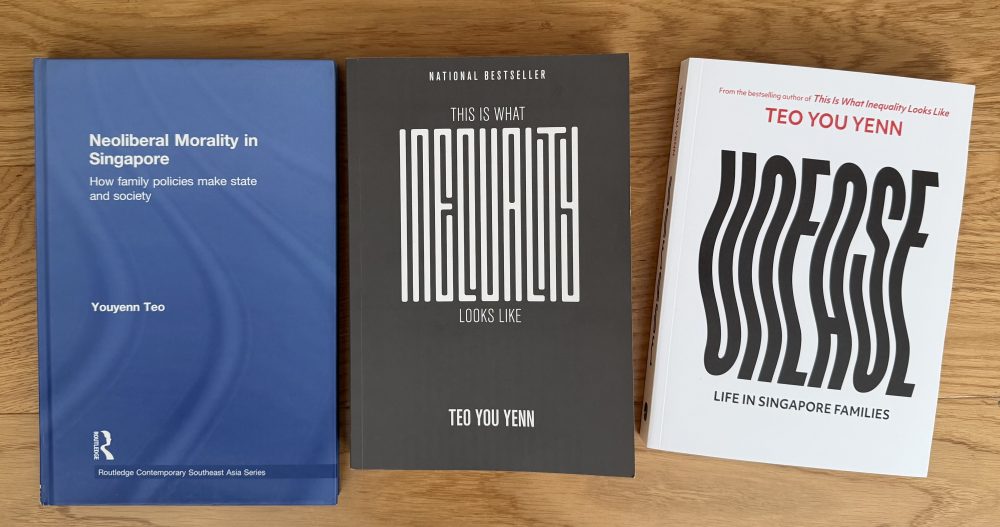
The other day my daughter, an only child, referred to Unease, my third book, as my fourth kid. She likes to tease me, my human child. She enjoys watching me squirm with guilt as she brings up the family lore—of her creation—that 2017, the year I was most intensively writing my second book, This Is What Inequality Looks Like, was a year I neglected her. In 2025, an older kid than she was in 2017, her eyes lit up with mischief every time she claimed that my immersion-obsession with Unease was bringing back ‘traumatic’ memories of being forgotten. Last week a friend texted me congratulations on my “new book baby”, making me wonder if indeed I had made my only child feel like she had to compete with her book-siblings for attention.
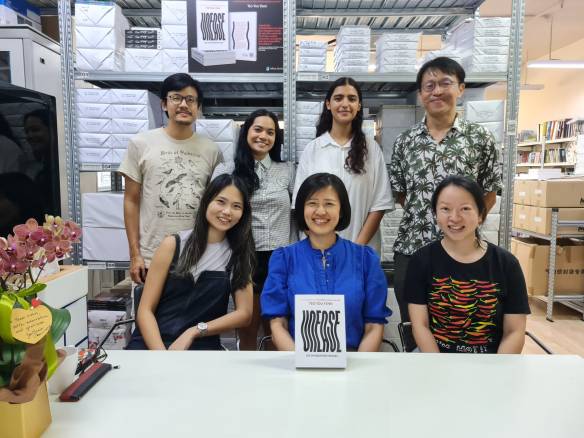
I don’t think I’ve referred to my books as my children in public, and apart from this letter, I’m not intending to start. But I suppose this reference to books as writers’ children must be pretty common. Writing a book is a deeply immersive and highly personal process. The work is consuming and the labour feels like care, nurturance, a complicated love. For better and for worse, there is a great deal of one’s self that finds its way into a book, and that too finds its mirror in parenting. And of course, in the best-case scenario, it takes a village to raise a book-baby.
I have been tremendously lucky in this last regard. In the writing of this book, I have had many villagers to rely on. There are people offering direct help—colleagues and editors who bring ideas for the text. Friends and family support the process by inserting light and joy in everyday life, so that it is possible to go to my desk day after day, year after year. And then there is a whole backdrop that is the accumulation of knowledge, all those shoulders of giants—teachers and mentors and peers who’ve taught me how to read and think and write; scholars and writers who have no way of knowing that their consciousness would find a way to meld with mine, other people’s writings sparking a million unpredictable connections that turn into new words, sentences, paragraphs, eventually a book. What a miracle.
The other day, a journalist came to talk to me about Unease. I cannot now recall what he asked me, but I know I launched into an answer about how this book demands more from readers than TIWILL did. It is a book made up of chapters, not essays. There is a beginning, a middle and an end. The book makes sense, I think, if it is read that way—in sequence, from start to finish. TIWILL is a dip-in, dip-out book; Unease, not so much. I cannot claim there is no TL;DR version—people who come up with these will no doubt outwit me—but because I put so much effort into detailing the nitty-gritty, I don’t see its key arguments, which can be summarised, as the main attractions. To get the most out of it, the book demands sustained attention. In various places, it asks the reader to stretch, reach—beyond what’s already in their knowledge banks and imaginations—in order to get to a different place, better prepared to enter the following chapter.
Reader, I cannot predict what you will find when you do all this labour, but I think that is a miracle too—my complicated human consciousness meeting your complicated human consciousness. The journalist smiled when I said all this, pointed out that I am going against the grain in every trend around reading and attention in the contemporary world. But I don’t know, I guess since I’ve had the audacity to write a book, I should have the audacity to believe people will read it with some of the same care with which I wrote it.
I am about to hand over my book-baby to you. Unlike my human child, who will belong to me even when she is an adult and out in the world, I do not intend to continue thinking of Unease as mine once it is published. It was a special, beautiful experience to have written it. I am satisfied with how it has turned out. But I read much more than I write so I know how it goes: once a book is in someone else’s hands, it is their prerogative what value they make of it. Thank you, in advance, for taking it the rest of the way.
— Teo You Yenn, March 28, 2026
Unease: Life in Singapore Families (Ethos Books, 2026) will be in bookstores on April 4, 2026
For news and updates on events, follow Ethos Books
 Teo You Yenn